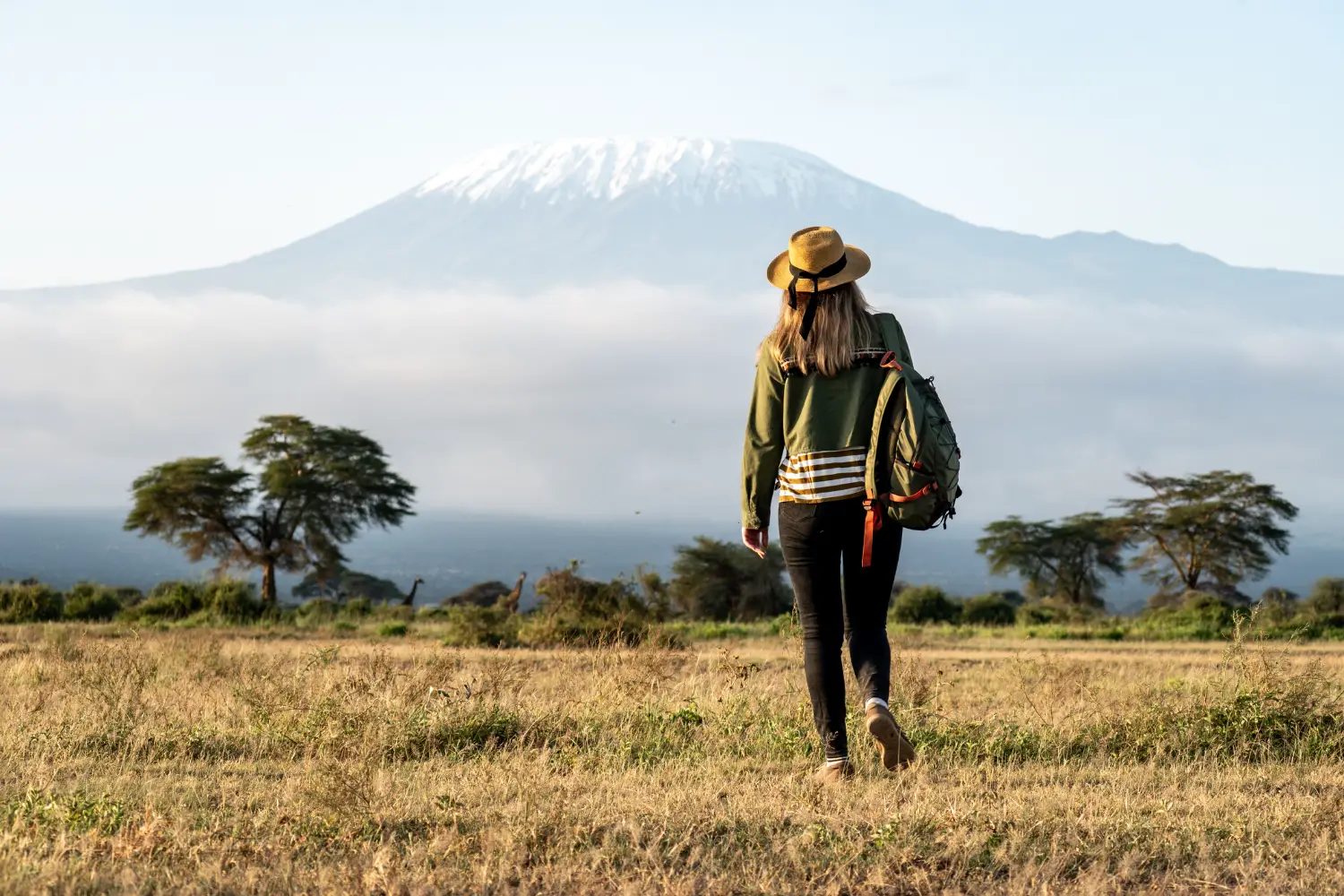
Why Tanzania
Why people come.
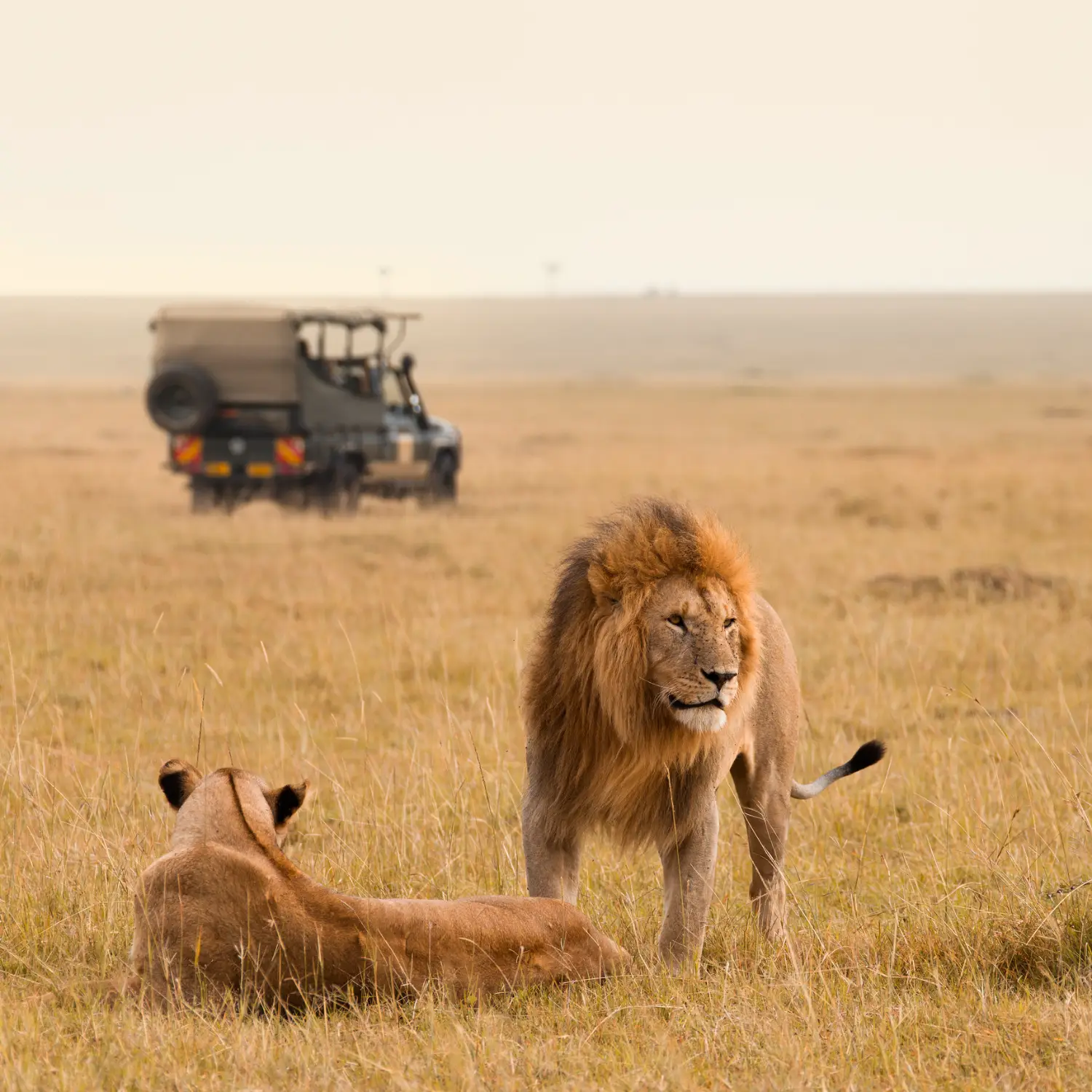
The Big Five, the Great Migration, and landscapes that run to the horizon — across 22 national parks. Most travelers spend seven to ten days on the Northern Safari Circuit.
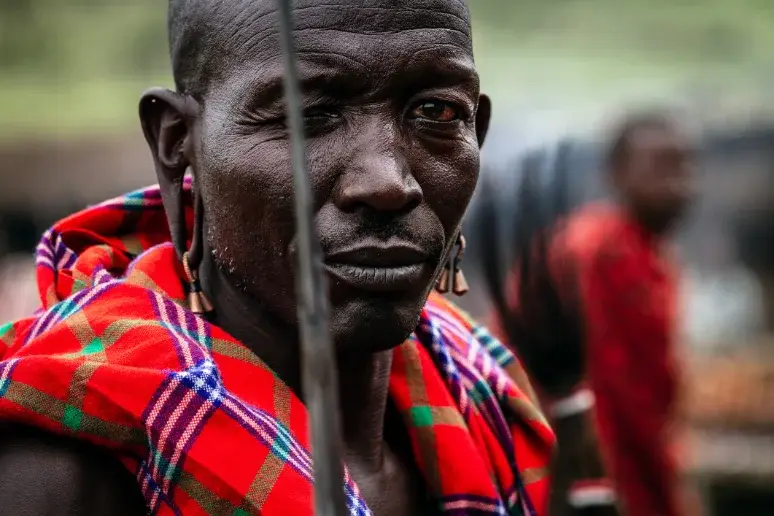
More than 120 ethnic groups live in Tanzania, including the Maasai. Time with local communities, a morning spent in a village or a market day fits easily into most routes.
Finish on Zanzibar — a short flight from the plains to white sand and warm, still water. Three or four nights is usually enough to feel like a second holiday.
About Tanzania
A country built for adventure.
From the Indian Ocean to the roof of Africa — and the richest wildlife country on earth in between.
22
National parks
~40%
Of land area protected
~20%
Of Africa's large mammals
5,895 m
Mt. Kilimanjaro — Africa's highest
68,800 km²
Lake Victoria — Africa's largest lake
1,470 m
Lake Tanganyika depth — 2nd deepest on earth
Where your journey can take you
Iconic places.
Tanzania has more than 22 national parks. Roughly 90% of visitors travel to the Northern Circuit — exceptional landscapes, iconic sites, and abundant wildlife.
Serengeti
Endless plains. The Migration. Predator and prey in plain sight.
Did you know — A UNESCO World Heritage Site of almost 15,000 km², supporting around 1.5 million wildebeest and 300,000 zebra — and the largest lion population in Africa, roughly 3,000.
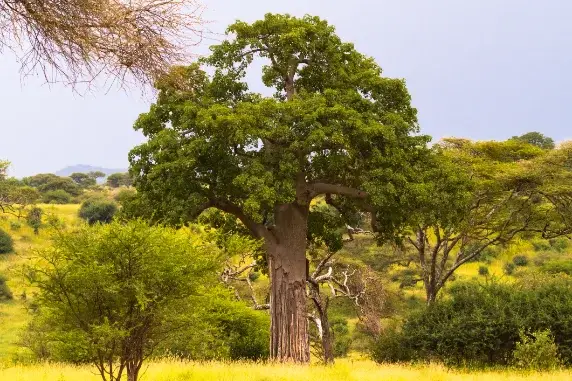
Tarangire
Baobab forests. Elephant herds. A river that draws all life.
Did you know — Baobabs here can live over 1,000 years — and in the dry season the river pulls in more elephants than anywhere else in northern Tanzania, sometimes 300 in a single herd.
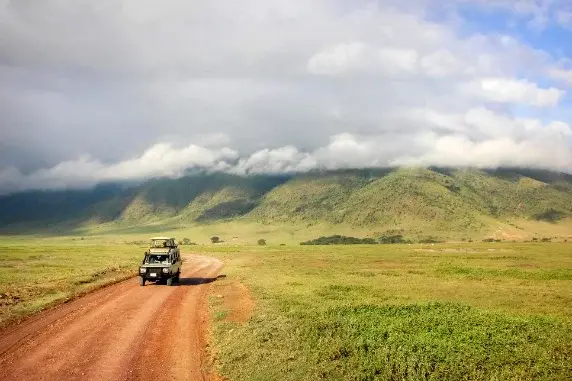
Ngorongoro Crater
The world’s largest intact caldera. A self-contained ecosystem.
Did you know — The world’s largest intact volcanic caldera and a UNESCO World Heritage Site. The Ngorongoro Crater stretches nearly 20 km across, with walls rising approximately 600 meters above the crater floor.
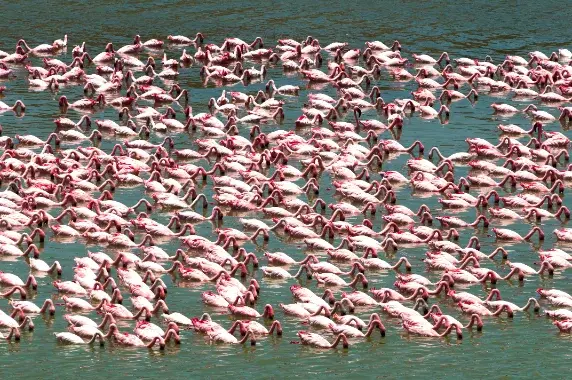
Lake Manyara
Tree-climbing lions. Flamingo shores. A hidden gem.
Did you know — A UNESCO Biosphere Reserve where the shallow soda lake draws flamingos in their thousands, alongside more than 400 recorded bird species.
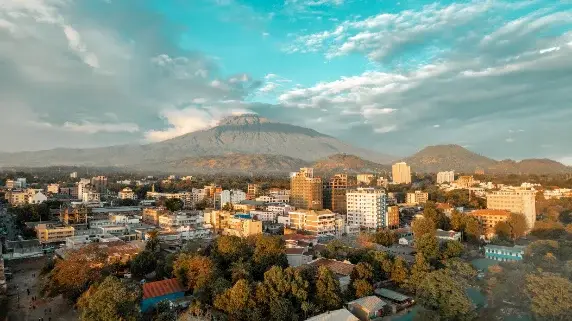
Arusha
The gateway to the Northern Circuit, under the peak of Mount Meru.
Did you know — Mount Meru rises to 4,562 m behind the city — Tanzania’s second-highest mountain. The climb starts on foot through Arusha National Park, past giraffe and buffalo, and ends with Kilimanjaro on the horizon at sunrise.
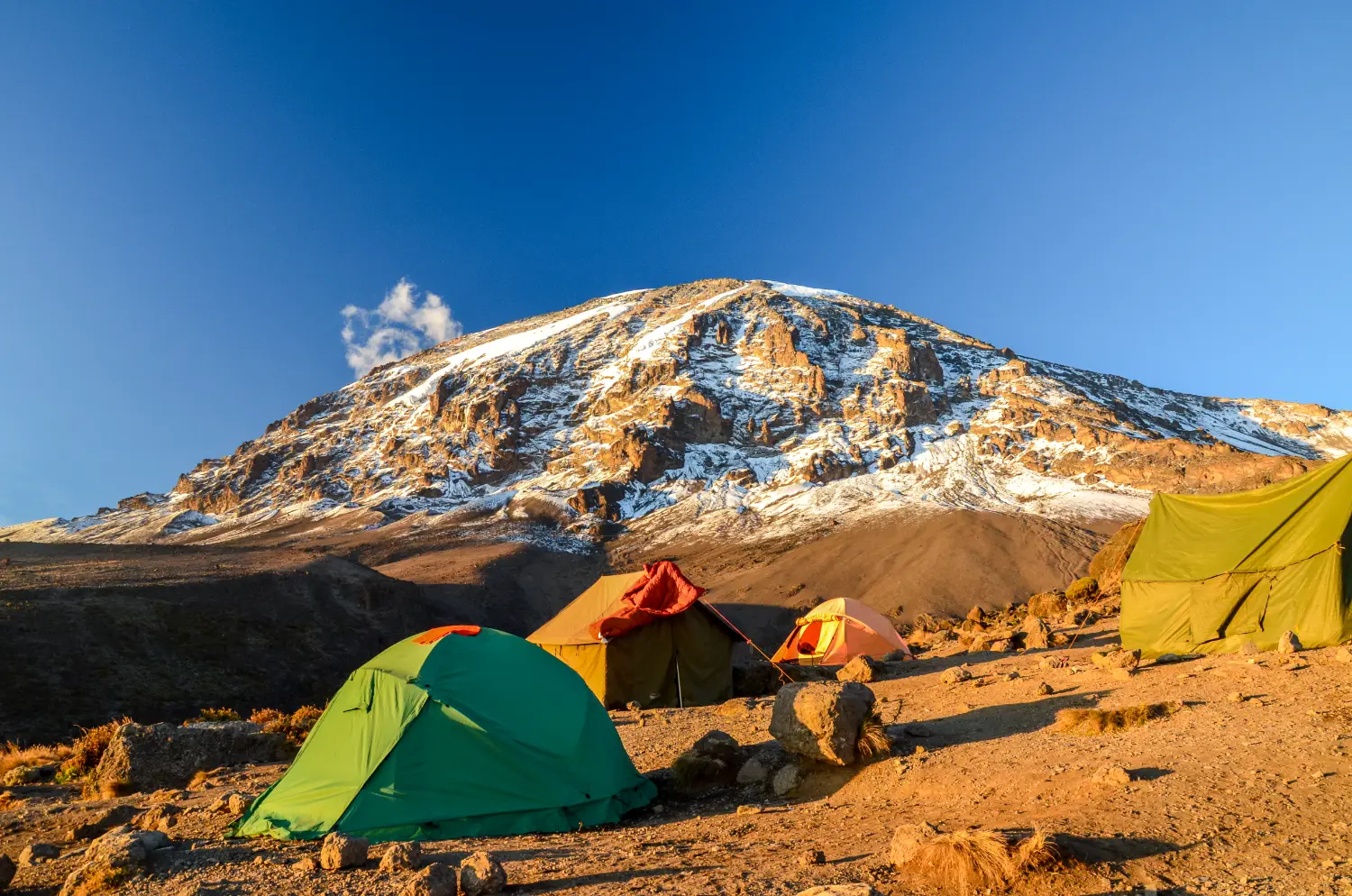
Mt. Kilimanjaro
Africa’s highest peak. Rainforest to glacier in one climb. Accessible to non-technical climbers.
Did you know — At 5,895 m, Kilimanjaro is Africa’s tallest peak and the world’s highest freestanding mountain, rising almost 5 km above the surrounding plains.
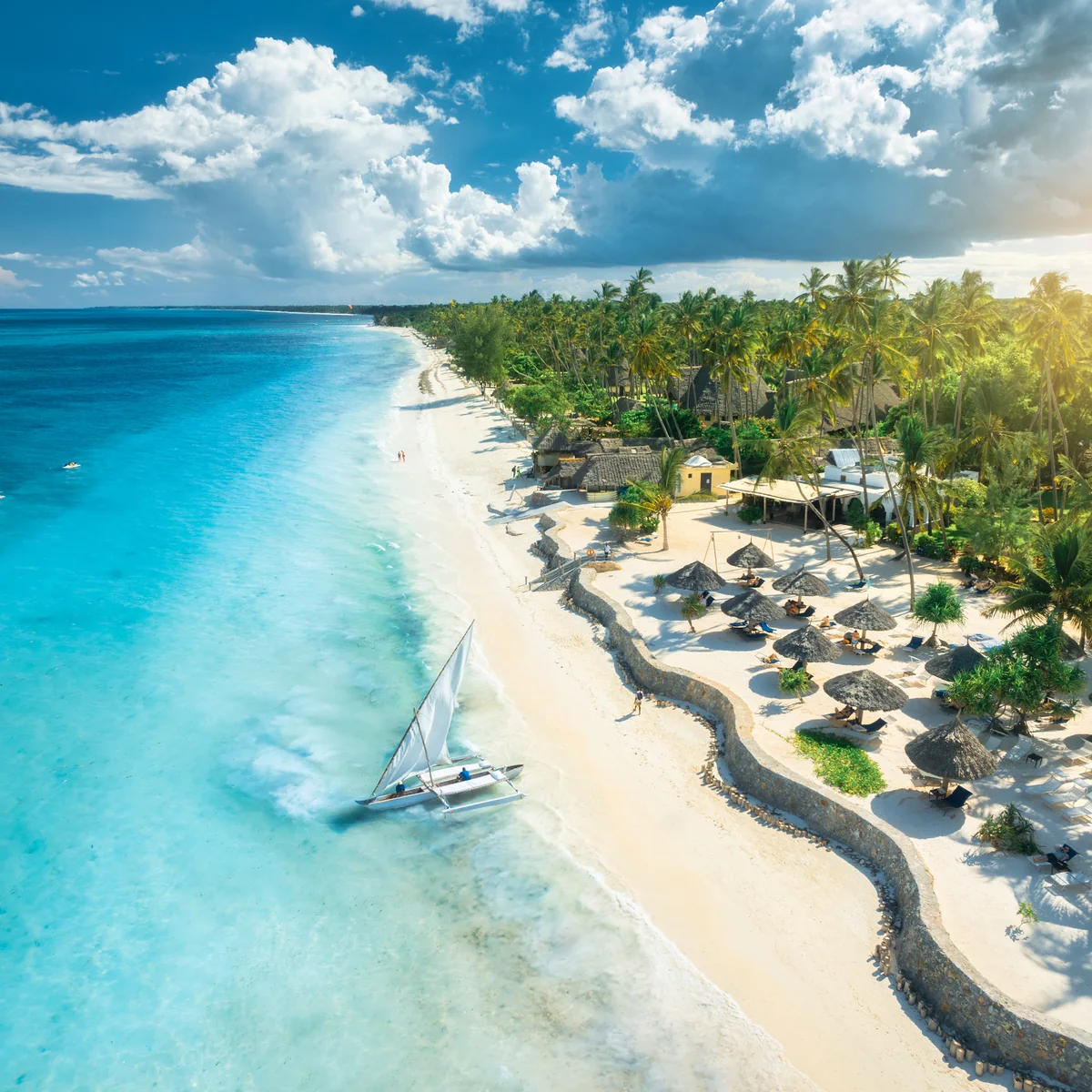
Zanzibar / Islands
The perfect ending. White sand. Turquoise water. Total stillness.
Did you know — Stone Town is a UNESCO World Heritage Site — a thousand years of Swahili, Arab, Indian and European trade in one maze of streets.
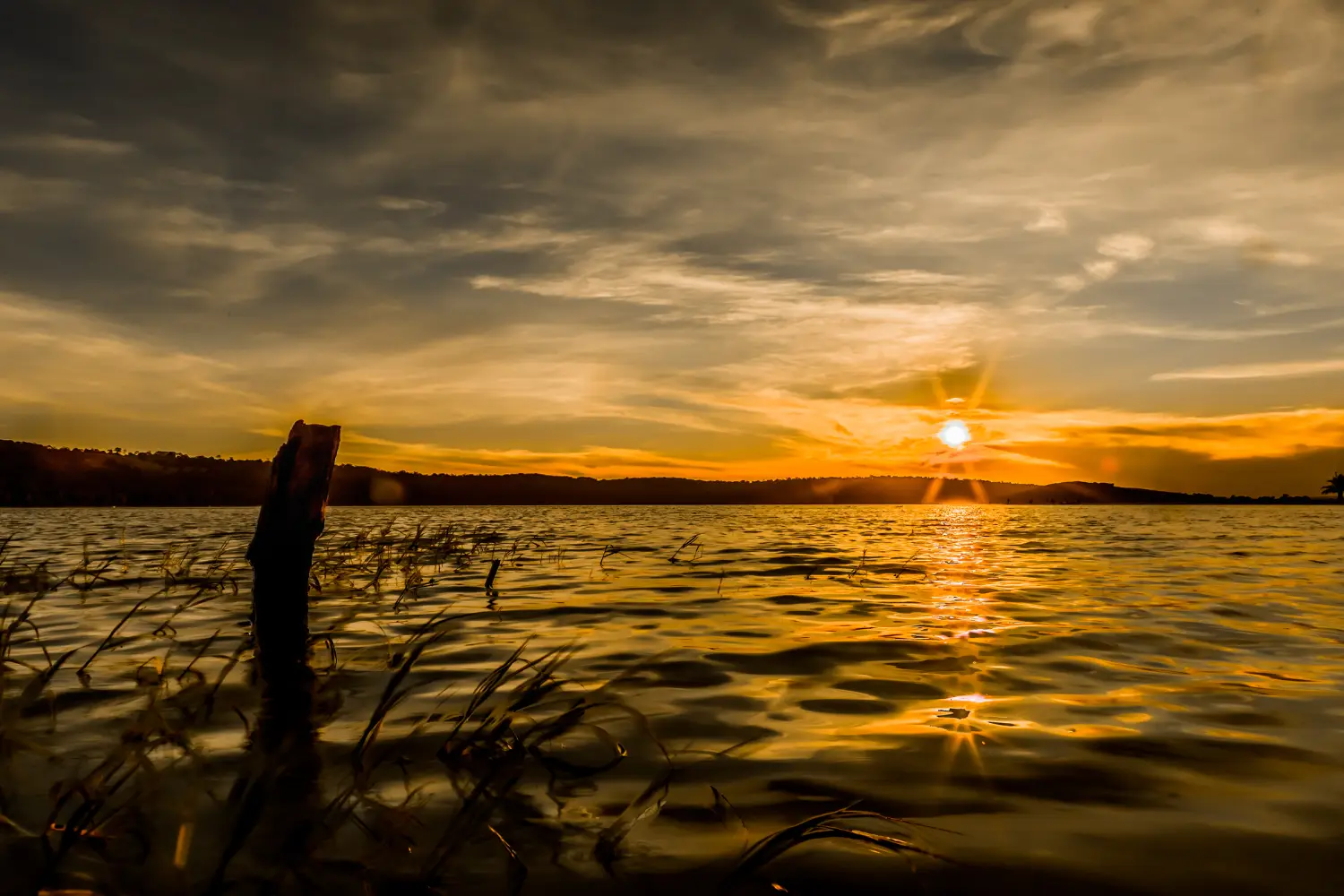
Lake Victoria
Africa’s largest lake. An untouched western frontier.
Did you know — Rubondo Island in the lake is a national park in its own right — forest, sitatunga antelope, and chimpanzees that have lived wild there since the 1960s. One of the least-visited parks in the country.
Who you came to see
Animals.
The Big Five and the thousands of species around them — tracked with guides who have spent their lives reading this landscape.
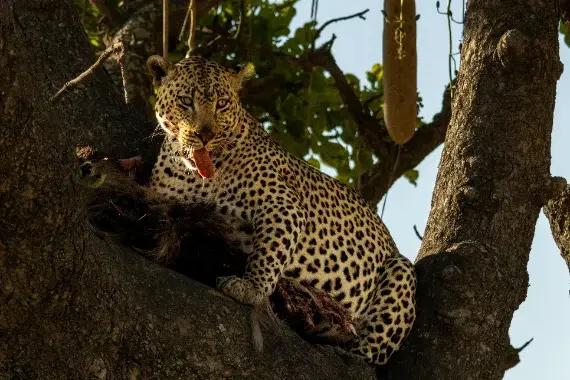
The most elusive of the Big Five — most often found resting in a tree, having hauled its kill up out of reach of lions and hyenas.
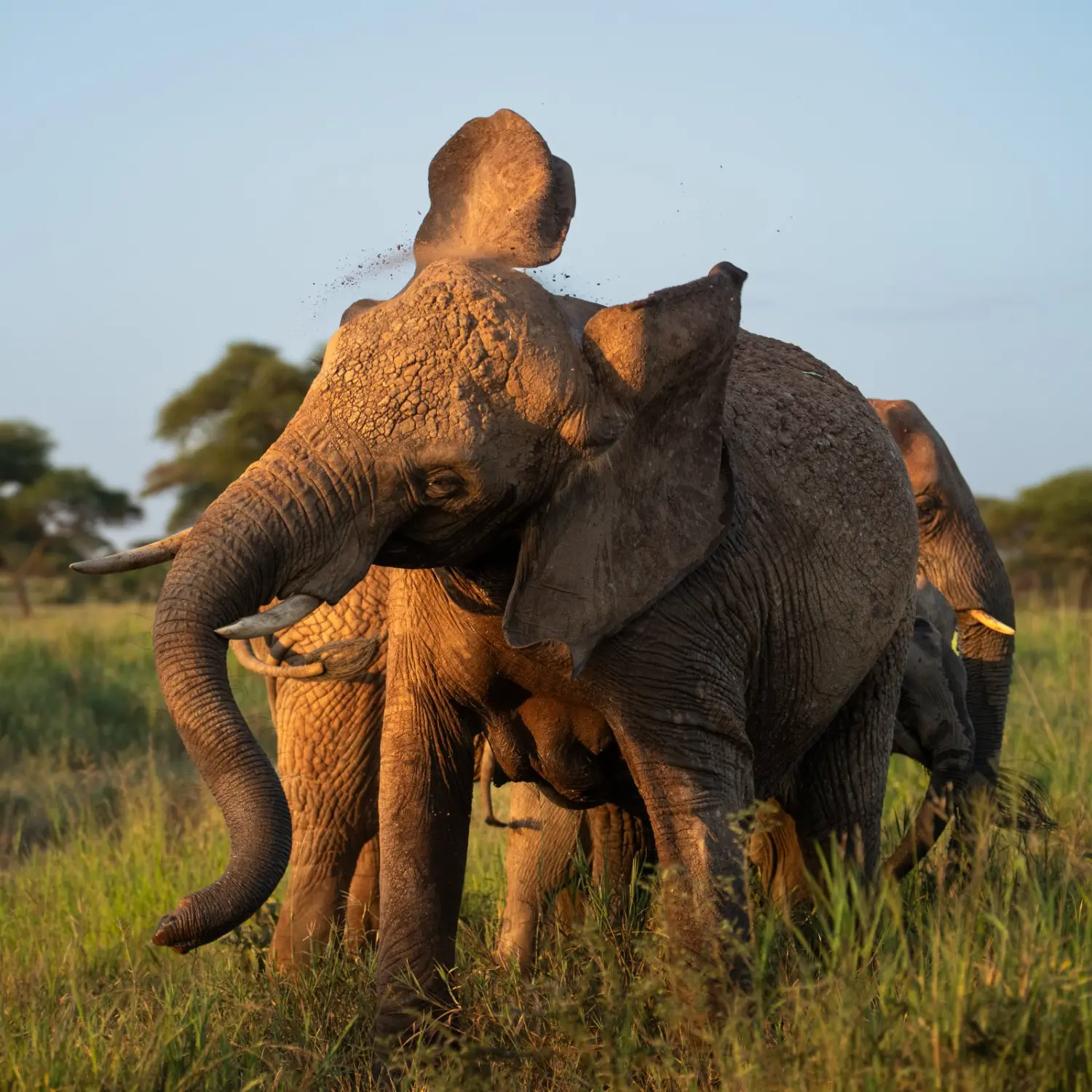
Herds are led by a matriarch — usually the oldest female — who carries the memory of migration routes and water sources across generations.
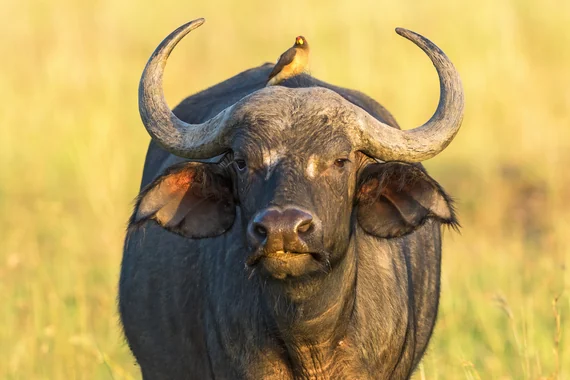
Considered the most dangerous of the five. The oxpeckers riding on their backs feed on ticks and raise the alarm at the first sign of a predator.
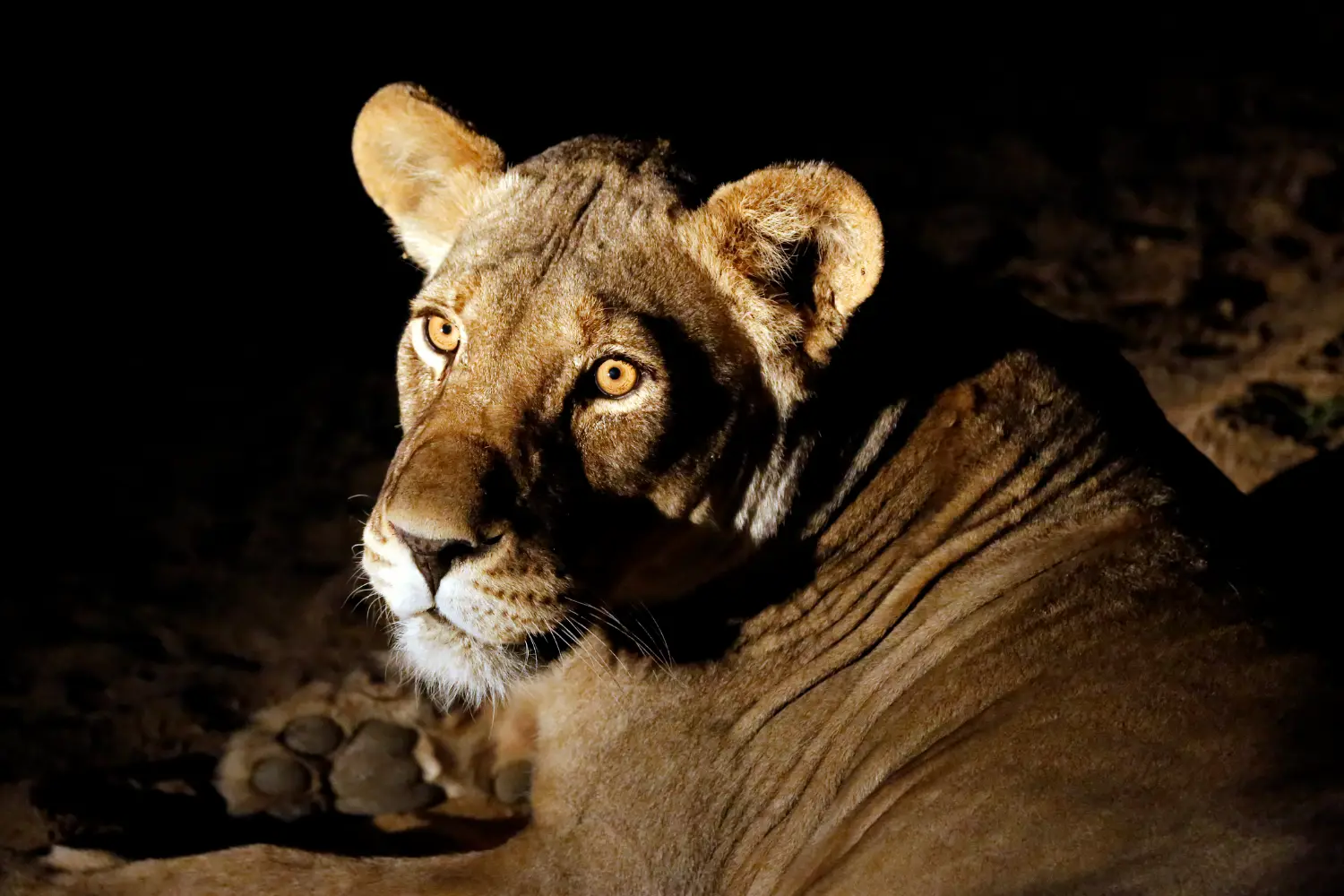
Lions rest up to 20 hours a day, so early morning and dusk are when you see them hunting. Unlike most lions, in Tarangire they are also known to climb trees.
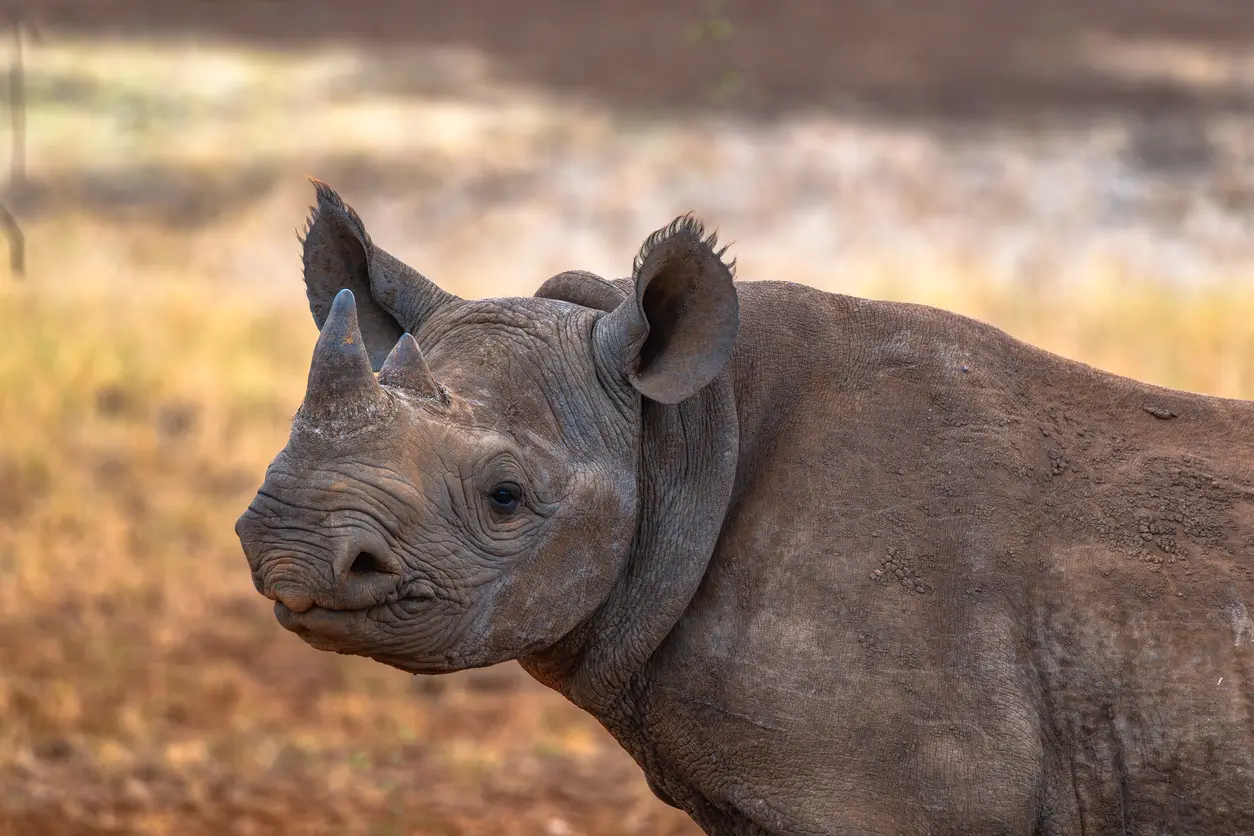
The rarest sighting of the five. A small population survives on the Ngorongoro crater floor, where the open ground makes them possible to spot.
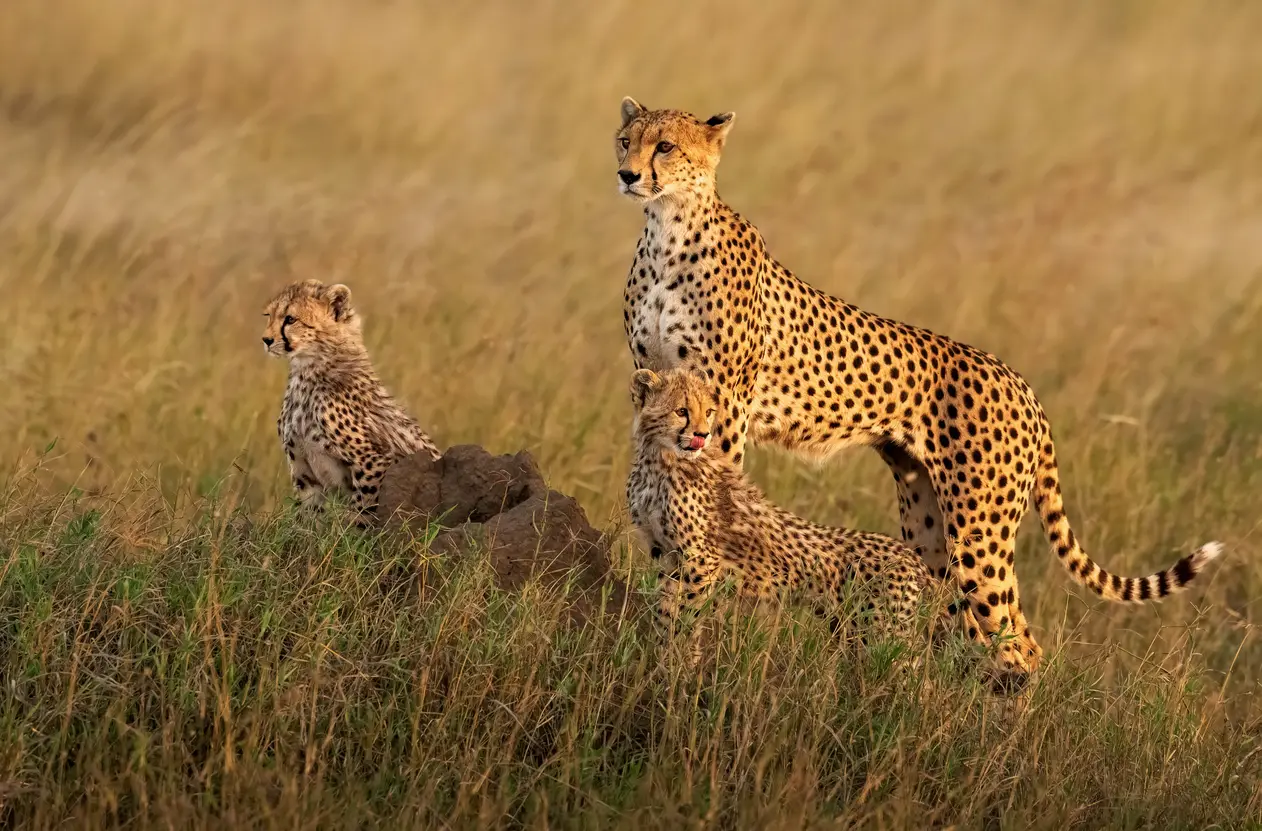
The fastest land animal, and a daylight hunter — the Serengeti’s short-grass plains are among the best places on earth to watch a chase.
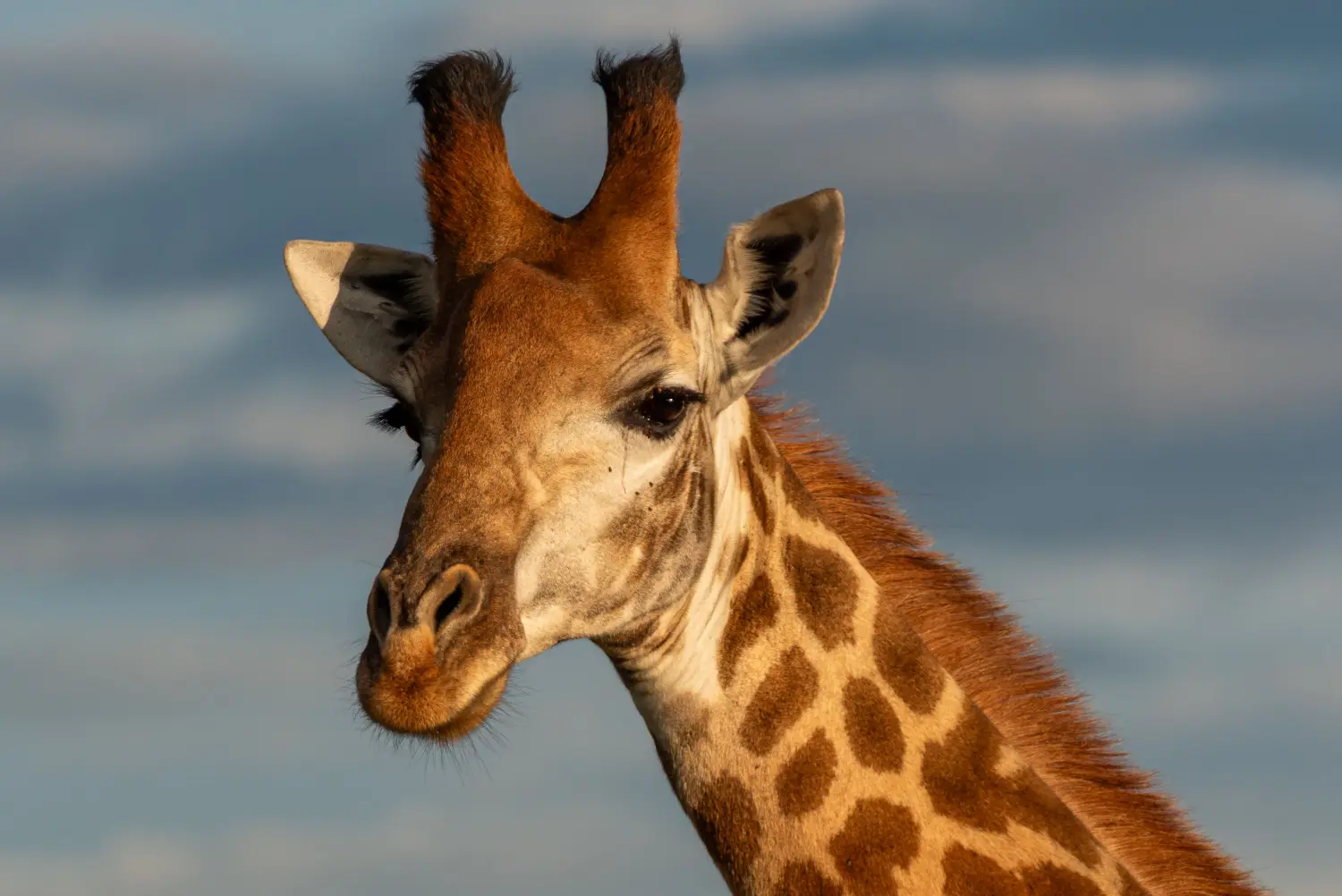
Tanzania’s national animal. Each coat pattern is unique, and the Maasai giraffe carries the most ragged, star-shaped markings of all.
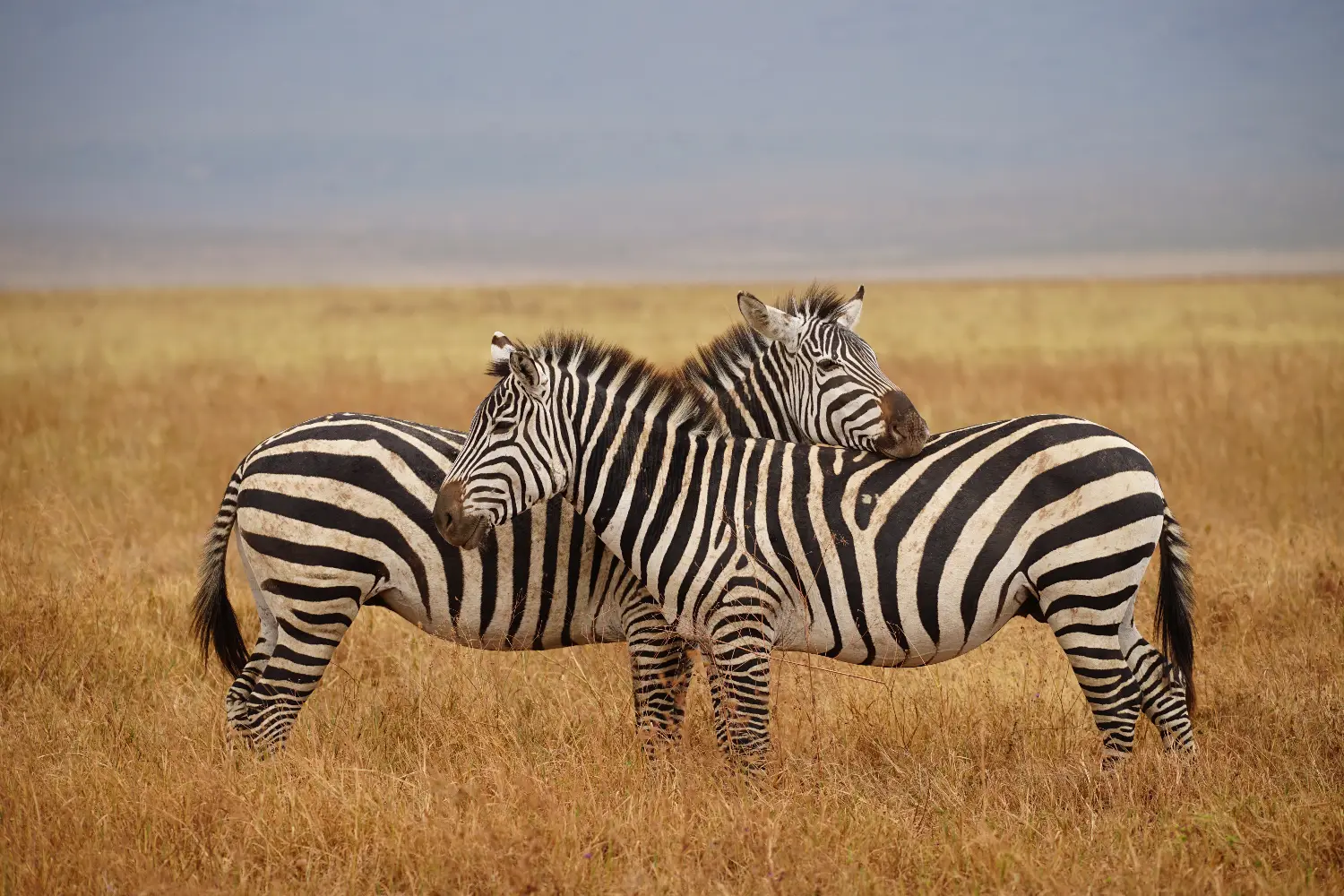
No two stripe patterns are the same. Around 200,000 zebra travel with the wildebeest on the annual migration, grazing the tall grass ahead of them.
When to visit
Every month gives you something the others can't.
The year runs in three stretches: one long dry season, a drier window in January and February, and two rainy periods either side of it. Temperature, crowds and price move together across all three — so pick the one that sounds like your trip.
June – October
Dry season, herds and river crossings
Months without rain. The grass is low and bleached yellow, the dust turns the light gold, and animals gather around the remaining waterholes and rivers. The Migration reaches the famous Mara river crossings around July.
Weather
On average, areas receive just 9 mm of rainfall a month across six days, and most showers are brief and pass quickly. Days on the northern highlands sit around 23°C / 75°F, and nights are the coldest of the year, dropping to about 10°C / 50°F.
Landscape
Dry golden grass and bare, dusty ground. Thin vegetation means clear views across the plains, so animals are easy to see. These are the best conditions of the year for photography.
Crowds & price
Peak on both counts. July to September alone brings 44% of the Serengeti’s international visitors for the year, so expect other vehicles at the good sightings.
Trade-off — the busiest and most expensive months of the year
January – February
Calving season, between the rains
The wildebeest give birth on the southern Serengeti plains and the predators come with them — weeks of concentrated drama. December through February is also one of the best windows for climbing Kilimanjaro.
Weather
Sunny days broken by brief, sometimes intense showers rather than steady rain. The warmest stretch of the year inland, around 30°C / 86°F by afternoon and roughly 18°C / 64°F at night.
Landscape
Still green from the short rains, with the southern plains grazed short by the herds. Open, low grass and big dramatic skies — easy viewing across long distances.
Crowds & price
Noticeably quieter than high season — February draws fewer than half as many international visitors as August — but still busy.
Trade-off — weather is less predictable, and calving camps in the south book up early
November – December, March – May
Green season, birds and value
The plains turn deep green, flowers come up and the migrant birds arrive. Rain comes most days, but usually only for a few hours in the evening or overnight, so mornings are typically clear.
Weather
Tanzania’s green season, with warm days, lush landscapes, and periodic rains. Showers are often concentrated in the late afternoon or overnight, leaving stretches of clear weather during the day. Expect daytime temperatures of roughly 25–29°C (77–84°F), with cooler evenings.
Landscape
The greenest landscape — lush grass, full trees, and flowers in bloom. Herds scatter across the landscape, drawn by the abundance of water. Rivers and seasonal streams fill, transforming the normally dry landscape.
Crowds & price
The quietest parks and the lowest rates of the year: April and May together account for just 6% of the Serengeti’s international visitors. Christmas to New Year is the exception, and is priced as peak.
Trade-off — sightings take a little more patience in the taller grass, and the rain softens the tracks, so driving may be slower — mostly in the southern parks
The year, month by month.
Jan
Feb
Mar
Apr
May
Jun
Jul
Aug
Sep
Oct
Nov
Dec
Visitor bars show international arrivals in the Serengeti, 2024. Source: TANAPA.
Wildlife movements follow the rains, so timings shift by a few weeks from year to year.
Ready to begin?
Experience the extraordinary.
Leave the details to us.
Tell us a little about what you are looking for and we will come back with something considered — not a brochure, but a conversation.